
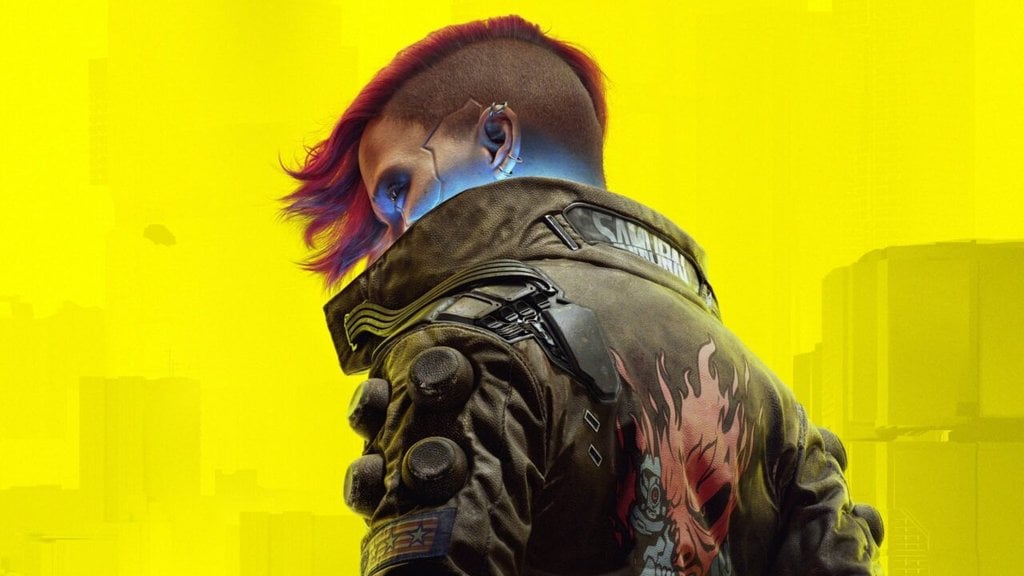
Video games have long served as windows into imagined futures, but few have captured the dystopian cyberpunk aesthetic quite like CD Projekt Red’s ambitious title, Cyberpunk 2077. Set in the fictional Night City of 2077, the game presents a world where megacorporations have replaced governments, body modification is commonplace, and the American Dream has devolved into a neon-lit nightmare. But how realistic is this vision of the future? After exploring antiquity and infiltrating the world of espionage, the French YouTube series Mode Expert has turned its attention to a fascinating aspect of storytelling: alternate histories, or uchronies. The channel recently consulted AlterHis, a renowned expert in alternative historical scenarios, to evaluate the plausibility and realism of the universe depicted in Cyberpunk 2077.
The Foundations of Cyberpunk’s Alternate Timeline
Cyberpunk 2077’s narrative doesn’t simply spring from imagination alone—it builds upon decades of established lore from the original Cyberpunk tabletop role-playing game created by Mike Pondsmith in 1988. The game’s timeline diverges from our own history in the early 1990s, with a series of corporate wars, economic collapses, and political upheavals that fundamentally reshape American society. According to AlterHis, this divergence point is crucial for understanding the world’s plausibility. The expert notes that the game’s creators drew heavily from real economic trends and political anxieties of the 1980s—the era of corporate raiders, deregulation, and growing wealth inequality. These elements were extrapolated to their logical extreme, creating a world where corporations have effectively replaced nation-states as the primary power structures. The collapse of the traditional American government in the game’s lore, replaced by fractured regional authorities and all-powerful corporations, reflects genuine concerns that were prevalent during the Cold War era and have only intensified in subsequent decades.
The expert emphasizes that successful alternate histories require what historians call a “plausible point of divergence”—a specific moment where events could have reasonably unfolded differently. Cyberpunk 2077’s timeline includes several such points: a devastating gang war that destabilized urban centers, a stock market crash that dwarfed the 1929 disaster, and a series of corporate conflicts that rendered traditional military forces obsolete. While individually extreme, AlterHis argues that each of these events has historical precedent or emerged from trends visible in our own timeline, lending the fictional world a disturbing sense of possibility.
Technology and Human Augmentation: Fantasy or Forecast?
Perhaps the most visually striking element of Cyberpunk 2077 is its depiction of human augmentation—citizens replacing their biological components with cybernetic enhancements ranging from enhanced optics to full limb replacements. AlterHis approached this aspect with particular interest, noting that the game’s timeline for technological development is simultaneously its most fantastical and its most prescient element. Current advances in prosthetics, neural interfaces, and biotechnology suggest that some form of human augmentation is not merely possible but increasingly probable. Companies like Neuralink are already developing brain-computer interfaces, while advanced prosthetics have given amputees unprecedented control over artificial limbs. The expert points out that Cyberpunk’s vision extrapolates these technologies by roughly fifty years—a timeframe that, while optimistic, isn’t entirely unreasonable given the exponential pace of technological advancement. However, the social consequences depicted in the game—widespread “cyberpsychosis” and a black market for stolen implants—represent the darker implications that current tech developers rarely address publicly.
What makes Cyberpunk 2077’s technological vision particularly compelling, according to AlterHis, is its integration with social and economic systems. The game doesn’t simply present cool gadgets; it explores how access to enhancement technology might stratify society further, creating new forms of inequality based on the quality and quantity of one’s augmentations. This mirrors historical patterns where technological advances—from the printing press to the internet—have consistently benefited those with capital before trickling down to broader populations, often decades later.
Corporate Dominance: A Cautionary Tale Rooted in Reality
The megacorporations of Night City—Arasaka, Militech, and others—wield power that would make today’s largest companies seem modest by comparison. These entities maintain private armies, conduct espionage operations, and influence or outright control government policy. While this might seem like pure science fiction, AlterHis draws intriguing parallels to historical precedents. The British East India Company, at its height, commanded a private army larger than most nations and effectively governed vast territories. Similarly, company towns in early 20th-century America gave corporations near-total control over workers’ lives. The expert suggests that Cyberpunk 2077 essentially asks: what if deregulation continued unchecked for another half-century? The answer, the game proposes, is a world where corporate quarterly reports matter more than human lives, and where citizens become consumers first and people second—if at all.
The verdict from AlterHis is nuanced but ultimately fascinating: while Cyberpunk 2077’s world is undeniably exaggerated for dramatic effect, its foundational premises rest on identifiable trends and historical patterns. The game serves not as prophecy but as warning—a hyperbolic mirror reflecting anxieties about corporate power, technological ethics, and social fragmentation that permeate contemporary discourse. For fans of alternate history, it represents a masterclass in world-building, where every outlandish element can be traced back to a seed planted in our own reality. The expert concludes that this is precisely what makes the best uchronies so compelling: they don’t simply imagine different worlds, they force us to examine our own.
Expert Opinion: The increasing convergence of technology, corporate influence, and economic inequality in our current trajectory suggests that while Cyberpunk 2077’s specific vision remains fictional, its underlying warnings deserve serious consideration. As artificial intelligence, biotechnology, and global corporations continue to evolve beyond traditional regulatory frameworks, the next few decades will prove crucial in determining whether we steer toward a more equitable future or drift closer to the neon-lit dystopia that Pondsmith and CD Projekt Red imagined.