After a remarkable two-decade absence from the gaming landscape, Capcom’s beloved samurai action franchise Onimusha is preparing to make its triumphant return. The upcoming installment, Onimusha: Way of the Sword, is set to launch next month, bringing players back into a world where supernatural demons clash with legendary warriors in feudal Japan. The game represents one of the most anticipated revivals in recent gaming history, and fans who have been waiting since 2006’s Onimusha: Dawn of Dreams are eager to discover what new horrors await them in early Edo-period Kyoto.
The Onimusha series first burst onto the scene in 2001, establishing itself as one of the defining action franchises of the PlayStation 2 era. The original game sold over two million copies and spawned multiple sequels, spin-offs, and even an anime adaptation. The series was known for blending historical Japanese settings with supernatural elements, creating a unique atmosphere that combined the gravitas of samurai drama with the intensity of demon-slaying action. Now, with modern gaming technology at their disposal, Capcom is poised to introduce a new generation of players to the franchise while rewarding long-time fans with a fresh chapter in the ongoing battle against the demonic Genma.
The Nature of the Genma Threat
In exclusive interviews conducted at Capcom’s Osaka headquarters, lead writer Hiroshi Yamashita shed light on the motivations and origins of the game’s primary antagonists. According to Yamashita, the cosmology of Onimusha features two distinct realms: the living world of Japan and the hellish dimension ruled by the Oni. The Genma exist within this underworld, normally kept in check by the Oni forces. However, the violence and moral corruption occurring in the human world generates a spiritual byproduct known as malice, which serves as a beacon drawing the Genma toward our realm.
“To set the scene, we obviously have the Genma in this game’s Japan, but we have the other realm in Hell, which is ruled by the Oni,” Yamashita explained during the interview. “And within that space, the Genma also exist, and the Oni have kept them in place, but in the living world, from people killing each other and committing crimes, it generates this negative energy, this malice that you see in the game, and that attracts the Genma to the living world.” This mechanic creates a fascinating connection between human behavior and supernatural consequences, suggesting that humanity’s own darkness is partially responsible for the demonic invasion.
A Hierarchy of Evil
While the rank-and-file Genma operate purely on instinct, driven by primal urges to kill and consume, Yamashita revealed that a more sophisticated threat lurks within their ranks. Certain higher-level Genma possess intelligence, ambition, and their own mysterious objectives that extend beyond mere chaos and destruction. “Within the Genma ranks, there are specific Genma who are maybe a little different and do have their own motivations and objectives,” the writer noted. “Whilst the main Genma might not really have a specific objective because they’re just killing and spreading chaos, those others are more like scheming Genma.”
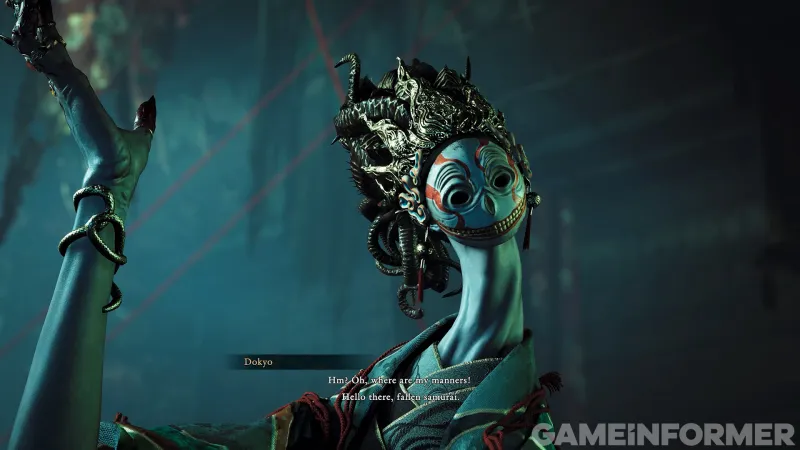
These scheming Genma appear to be manipulating the invasion for purposes that remain shrouded in secrecy. The carnage wrought by lesser demons serves to generate more malice, which in turn feeds into some larger, undisclosed plan. This revelation sets up the central conflict for the game’s protagonist, the legendary samurai Miyamoto Musashi, who must work to uncover and thwart their ultimate objective. Capcom has already showcased two prominent Genma figures: Dokyo and Rasho-Gan. Dokyo in particular has been described as occupying a “special” and “unique” position in the narrative, backed by a standout voice performance that promises to make her a memorable antagonist.
Breaking From Tradition
One notable departure from previous entries is the absence of Nobunaga, the historical warlord who served as a recurring villain throughout the original trilogy. His resurrection and defeat became a defining element of the franchise’s mythology, but Way of the Sword appears to be charting new territory. This decision aligns with Capcom’s stated intention to make the game accessible to newcomers while still paying homage to the series’ legacy. The setting of Kyoto during the early Edo period provides rich historical context, a time of political transition and social upheaval that perfectly complements the supernatural chaos introduced by the Genma incursion.
The choice of Miyamoto Musashi as the protagonist represents another bold creative decision. As one of Japan’s most celebrated historical figures, Musashi brings instant recognition and gravitas to the role. His legendary status as an undefeated swordsman who authored “The Book of Five Rings” makes him an ideal candidate to face the demonic threat. Capcom has reportedly worked extensively to create their own interpretation of this iconic figure while remaining respectful of his historical legacy. The development team even paid tribute to legendary actor Toshiro Mifune, whose likeness influenced the character design, creating a visual bridge between classic samurai cinema and modern gaming.
A New Era for Onimusha
The technical foundation for Way of the Sword appears equally impressive. Capcom requested their RE Engine engineers develop a “Dynamic Dismemberment System” specifically for this title, promising visceral combat that captures the lethal reality of samurai warfare. The environmental design has also evolved, replacing the series’ traditional puzzle boxes with larger, more integrated environmental challenges that flow naturally within the gameplay experience. While minigames have been removed, the mysterious Phantom Realm is reportedly making a return, offering players additional content to explore beyond the main campaign.
As Onimusha: Way of the Sword approaches its release date, anticipation continues to build among both longtime fans and curious newcomers. The game represents not just a continuation of a beloved franchise, but Capcom’s ambitious attempt to redefine what swordplay action games can achieve. Whether the scheming Genma will succeed in their mysterious objectives, or whether Musashi can cut through the demonic hordes to save Kyoto, remains to be seen when players finally get their hands on the complete experience next month.
Expert Opinion: The revival of Onimusha after twenty years signals Capcom’s confidence in their ability to modernize classic franchises for contemporary audiences, following the successful template established by their Resident Evil remakes. The emphasis on mysterious, scheming Genma with hidden agendas suggests a more narratively complex experience than previous entries, potentially positioning Way of the Sword as both a gameplay and storytelling evolution for the series. If successful, this could open the door for other dormant Capcom properties to receive similar treatment.