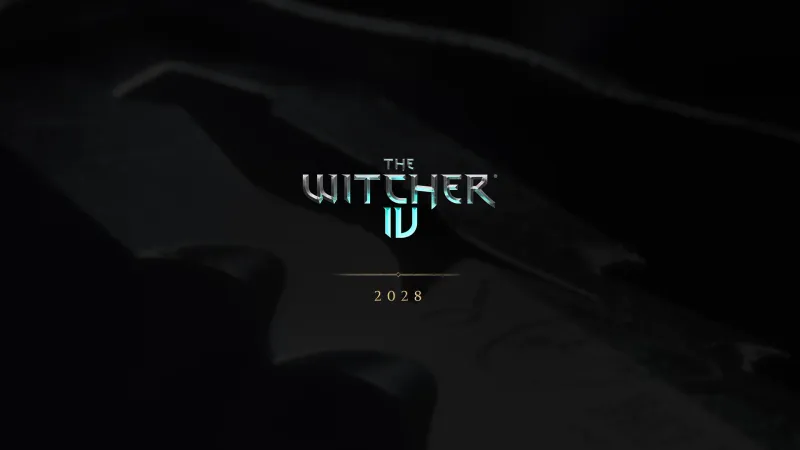
After years of speculation and eager anticipation from millions of fans worldwide, CD Projekt Red has finally confirmed an official release window for The Witcher IV. Joint-CEO Michał Nowakowski delivered the news in a video posted to the franchise’s official social media channels, revealing that the highly-anticipated sequel is targeting a 2028 launch. While the announcement came with a request for patience, it marks the first concrete timeline for what is expected to be one of the decade’s most significant gaming releases.
The timing of the announcement is particularly notable as it comes just ahead of Gamescom 2025, one of the world’s largest gaming conventions held annually in Cologne, Germany. However, fans hoping to get hands-on experience with the new title will need to temper their expectations. Nowakowski made it clear that The Witcher IV will not be present at the event, neither during the Opening Night Live presentation hosted by gaming journalist Geoff Keighley nor on the convention’s show floor. “While we’re not showing The Witcher 4 at the event, and we’re not ready to share an exact date, I can tell you this: The Witcher 4 is targeting a 2028 release window,” Nowakowski stated. “I know it’s a bit of a wait, and you’d love to play it sooner, but let the team cook. It will be worth the wait.”
CD Projekt Red’s Gamescom Plans Center on Wild Hunt DLC
Instead of showcasing the new installment, CD Projekt Red’s presence at Gamescom 2025 will focus on “The Witcher 3: Wild Hunt – Songs of the Past,” new downloadable content for the critically acclaimed 2015 title that has sold over 50 million copies worldwide. This DLC is scheduled for release in 2027 and will be featured during Opening Night Live, as confirmed by host Geoff Keighley. The expansion is expected to serve as a narrative bridge between Wild Hunt and The Witcher IV, potentially setting up story elements that will carry forward into the new game.
The decision to release substantial DLC for a nearly decade-old game demonstrates CD Projekt Red’s commitment to maintaining the franchise’s momentum while simultaneously developing the next major installment. Wild Hunt has remained remarkably popular among gamers, consistently appearing in sales charts years after its initial release, particularly following the success of Netflix’s The Witcher television series starring Henry Cavill. The show brought millions of new fans to the franchise, many of whom subsequently discovered the games and Andrzej Sapkowski’s original Polish fantasy novels that inspired them.
Ciri Takes Center Stage as The Witcher IV’s Protagonist
The Witcher IV was first officially revealed at The Game Awards 2024, where CD Projekt Red confirmed a significant shift in the series’ direction. Unlike the previous mainline entries that followed the adventures of Geralt of Rivia, the legendary monster hunter, the new game will star Cirilla Fiona Elen Riannon, commonly known as Ciri. In the game’s timeline, Ciri has grown into a fully-fledged Witcher, having completed her training and established herself as a formidable monster slayer in her own right. This transition makes narrative sense given the multiple endings of Wild Hunt, several of which saw Ciri embracing her destiny as a Witcher.
The choice to center the game on Ciri represents both a creative opportunity and a significant risk for CD Projekt Red. Geralt, voiced memorably by Doug Cockle in the English versions of the games, became one of gaming’s most iconic protagonists. His dry wit, moral complexity, and distinctive appearance made him instantly recognizable to gamers worldwide. However, Ciri’s unique abilities, including her Elder Blood powers that allow her to manipulate space and time, could open up entirely new gameplay possibilities that weren’t available with Geralt as the protagonist.
The Long Road to Development and Industry Context
The extended development timeline for The Witcher IV reflects broader trends in the gaming industry, where major AAA releases increasingly require five to seven years of development time. CD Projekt Red learned hard lessons from the troubled launch of Cyberpunk 2077 in December 2020, a release marred by significant bugs and performance issues, particularly on last-generation consoles. The studio has since rebuilt its reputation through extensive patches and the well-received Phantom Liberty expansion, but the experience clearly influenced their approach to The Witcher IV’s development schedule.
Meanwhile, the legacy of The Witcher franchise continues to influence the broader gaming landscape. Several former CD Projekt Red developers have founded new studios working on similar fantasy RPG titles, including Rebel Wolves, which is developing “The Blood of Dawnwalker.” Additionally, CD Projekt Red continues to expand its multimedia presence, with the second season of “Cyberpunk: Edgerunners,” the acclaimed anime series, currently in production. For The Witcher fans, the three-year wait may feel lengthy, but if CD Projekt Red delivers on its promise, 2028 could mark the beginning of an exciting new chapter for one of gaming’s most beloved franchises.
Expert Opinion: The 2028 release window positions The Witcher IV strategically within the next console generation cycle, likely coinciding with mid-generation hardware refreshes that could showcase the game’s technical capabilities. CD Projekt Red’s transparent communication about the timeline, combined with their explicit request for patience, suggests the studio has internalized lessons from Cyberpunk 2077’s premature release. Industry analysts should expect The Witcher IV to set new benchmarks for open-world RPG design, though the success of Ciri as a protagonist will ultimately determine whether the franchise can maintain its cultural relevance into the 2030s.