Christopher Nolan’s The Odyssey has finally arrived in theaters, bringing with it an epic retelling of one of the oldest stories in human history. For centuries, Homer’s ancient Greek epic has inspired countless artists, filmmakers, and novelists eager to interpret its wandering hero Odysseus and all the mythical encounters he has on his hard-earned journey home. Nolan is simply the latest creative visionary to take on a story that has proven remarkably adaptable, surviving shifts in culture, language, and medium without losing its emotional resonance. Yet while most adaptations focus on the heroic king of Ithaca himself, one legendary animator chose a radically different path over four decades ago.
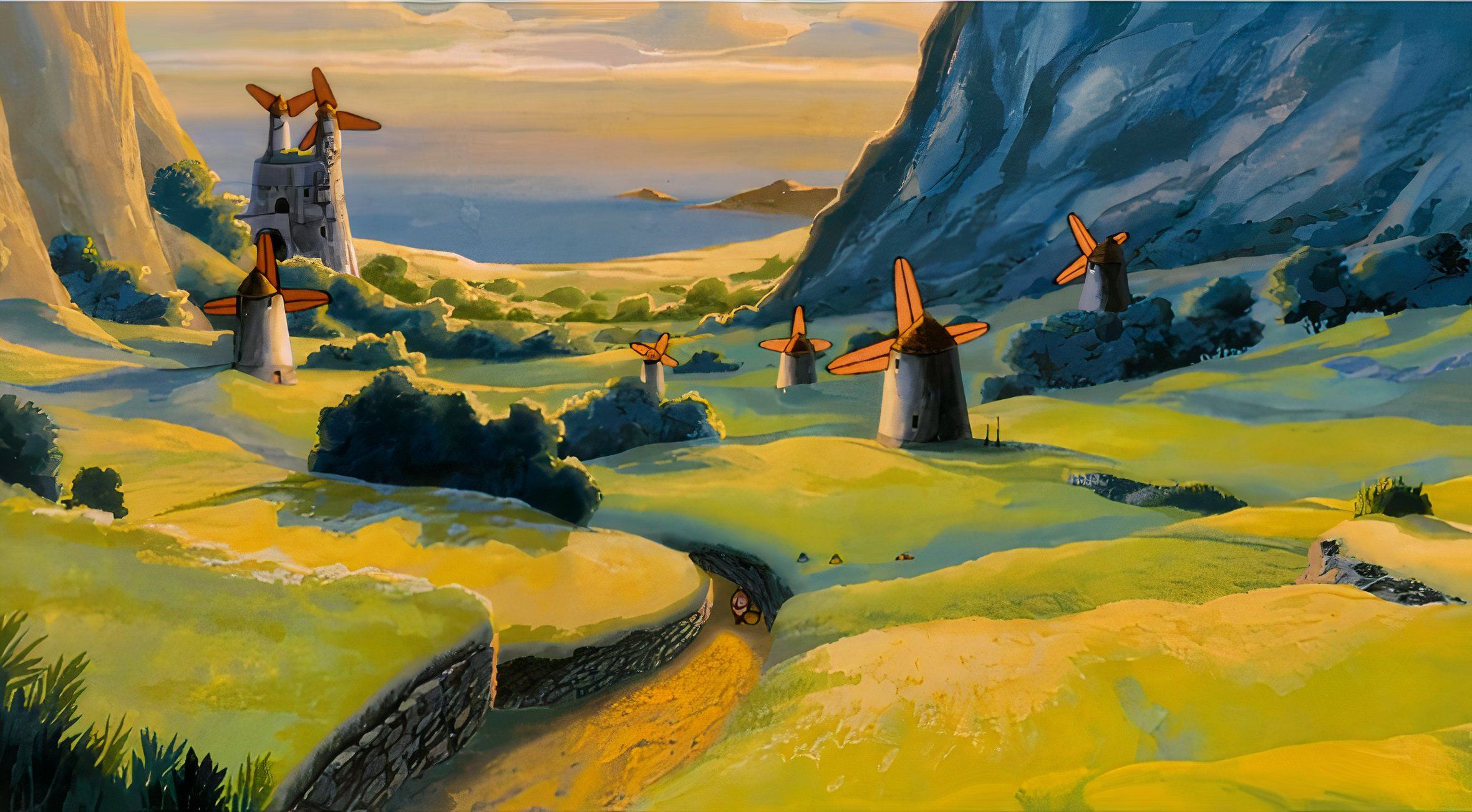
In 1984, Hayao Miyazaki released “Nausicaä of the Valley of the Wind,” a film that drew significant inspiration from Homer’s Odyssey but chose to center its narrative on a character type often relegated to the margins: the princess waiting at home. While Odysseus’s wife Penelope and daughter figures appear in the original epic primarily as patient, faithful presences awaiting the hero’s return, Miyazaki reimagined what such a character could be. His Nausicaä is not a passive figure weaving and unweaving a shroud to delay suitors; she is a warrior, scientist, diplomat, and ecological visionary who embarks on her own odyssey through a post-apocalyptic world transformed by human folly.
Reimagining the Homeric Heroine for a New Era
The connections between Nausicaä and Homer’s work are neither accidental nor superficial. Miyazaki explicitly named his protagonist after Nausicaa, the Phaeacian princess who appears in Book VI of The Odyssey. In Homer’s telling, Nausicaa discovers the shipwrecked Odysseus on the beach and provides him with clothing, food, and guidance to her father’s palace—a brief but memorable appearance that showcases her courage, wisdom, and compassion. Ancient scholars and modern critics alike have noted that Nausicaa represents one of the most fully realized female characters in the epic, possessing agency and personality that set her apart from other women in the narrative. Yet her role remains fundamentally supportive; she exists to aid the male hero on his journey.
Miyazaki saw untapped potential in this princess who helped a stranger and asked for nothing in return. His Nausicaä retains the classical character’s defining traits—her kindness toward outsiders, her connection to nature, her quiet strength—but becomes the protagonist of her own mythic journey. Set in a future Earth devastated by industrial warfare and toxic forests filled with giant insects, the film follows Nausicaä as she navigates conflicts between warring human kingdoms while seeking to understand rather than destroy the poisonous ecosystem threatening humanity’s survival. Where Odysseus conquers and outsmarts his obstacles, Nausicaä seeks harmony and understanding, offering a different model of heroism altogether.
Studio Ghibli’s Foundation and Lasting Legacy
The success of “Nausicaä of the Valley of the Wind” proved transformative for Japanese animation and for Miyazaki’s career. Although technically produced before Studio Ghibli‘s formal establishment, the film’s critical and commercial success directly enabled Miyazaki and producer Isao Takahata to found the legendary animation studio in 1985. The film demonstrated that animated features could tackle complex themes—environmentalism, pacifism, the consequences of technological hubris—while still captivating audiences of all ages. Many of the themes Miyazaki explored in Nausicaä would recur throughout his subsequent masterpieces, from “Princess Mononoke” to “Spirited Away.”
What makes Miyazaki’s approach particularly significant is his refusal to simply gender-swap the traditional hero’s journey. Nausicaä does not succeed through violence or cunning alone; her greatest victories come through empathy, sacrifice, and her willingness to understand perspectives others dismiss as monstrous. When she communes with the massive Ohmu insects that terrify other humans, she demonstrates a form of courage that Homer’s battle-hardened warriors would scarcely recognize. This represents not just a revision of The Odyssey but an expansion of what heroic narratives can encompass and celebrate.
Why This Interpretation Matters Today
As Christopher Nolan brings his considerable talents to Homer’s epic, audiences will undoubtedly experience a faithful and visually stunning interpretation of Odysseus’s legendary voyage. Yet Miyazaki’s forty-two-year-old film serves as a powerful reminder that ancient stories contain multitudes beyond their most famous characters. The princesses, servants, and supporting figures who populate these myths have their own stories worth telling, their own heroic potential worth exploring. By giving voice and agency to a character Homer sketched only briefly, Miyazaki created something both deeply respectful of its source material and radically original.
The enduring popularity of both The Odyssey and “Nausicaä of the Valley of the Wind” speaks to humanity’s inexhaustible appetite for stories about journeys—physical, spiritual, and moral. Whether following Odysseus across wine-dark seas or Nausicaä across toxic jungles, audiences continue seeking narratives that help them understand their own struggles and aspirations. Perhaps the greatest tribute to Homer’s genius is that his work continues inspiring such diverse interpretations nearly three millennia after its composition, proving that the best stories are never truly finished being told.
Expert Opinion: Miyazaki’s reinterpretation of Homeric themes through an environmentalist and feminist lens anticipated cultural conversations that would only intensify in subsequent decades. As Hollywood continues mining classical mythology for blockbuster material, Nausicaä stands as evidence that the most innovative adaptations often come from creators willing to shift focus from traditional heroes to overlooked figures whose stories illuminate different facets of the human experience.