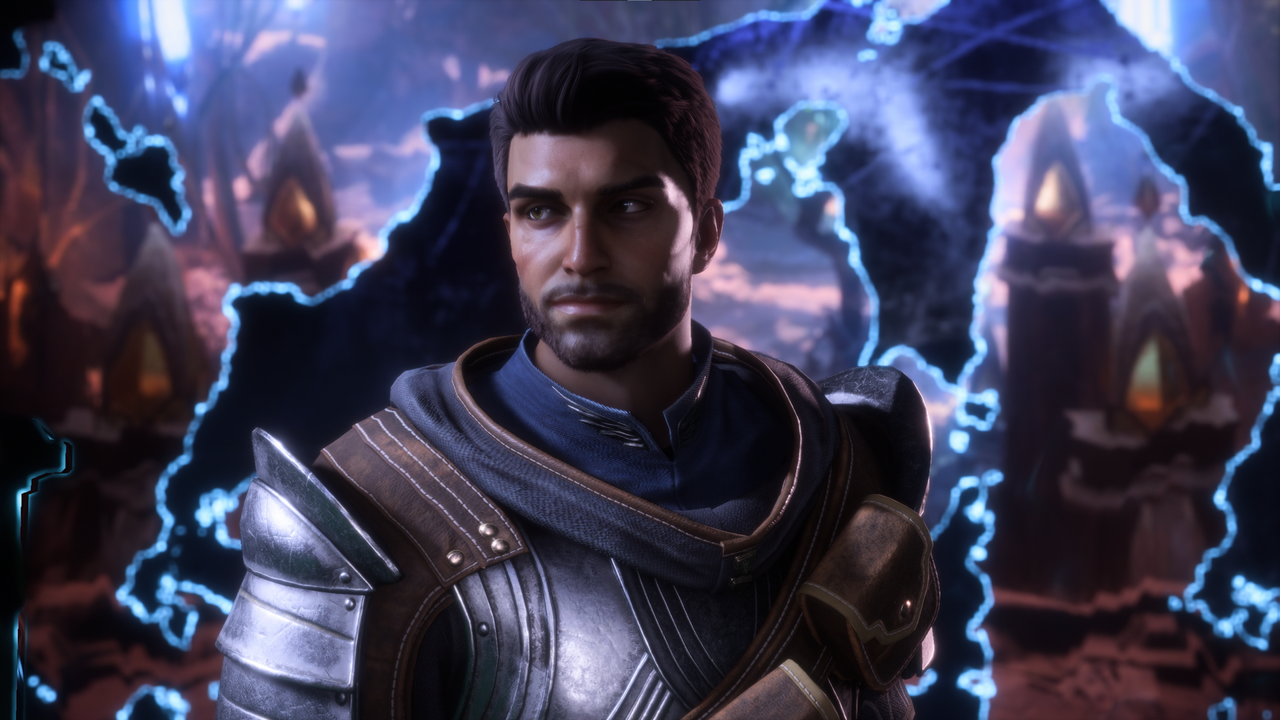
The future of one of gaming’s most beloved fantasy franchises appears increasingly uncertain, as former BioWare producer Mark Darrah paints a sobering picture of Dragon Age’s prospects under Electronic Arts. The veteran developer, who spent over two decades at BioWare shaping some of the industry’s most celebrated role-playing games, suggests that bringing the series back for another installment would face nearly insurmountable obstacles within EA’s current corporate structure.
BioWare’s epic fantasy series has experienced a turbulent journey in recent years, a surprising turn of events considering Dragon Age: Inquisition was both a critical darling and commercial success when it launched in 2014. The game won numerous Game of the Year awards and sold millions of copies, seemingly securing the franchise’s future. However, after a grueling decade-long gap between mainline entries and multiple reported internal reboots, Dragon Age: The Veilguard stumbled across the finish line in 2024 to disappointing sales figures, leaving fans and industry observers questioning what went wrong.
EA’s Troubled Relationship With Game Development
Speaking candidly to FRVR, Darrah attributed The Veilguard’s struggles and the series’ broader difficulties to systemic issues at EA. “Someone once described to me EA as a hedge fund with a video game hobby that it wished it didn’t spend so much money on, and I think that remains true,” he recalled. This characterization reflects longstanding criticism of EA’s approach to game development, where financial metrics often seem to take precedence over creative vision and long-term franchise building.
The comparison to a hedge fund carries particular weight given EA’s history of acquiring promising studios only to shutter them after underperforming releases. Visceral Games, creators of Dead Space, and Maxis, the legendary studio behind SimCity and The Sims, are just two examples of once-thriving developers that met their end under EA’s ownership. This pattern has created a climate of uncertainty that permeates the publisher’s remaining studios, including BioWare.
A Graveyard of Beloved Franchises
Darrah’s most striking observation concerns EA’s extensive library of dormant intellectual properties. “EA owns a frightening number of IPs that are dormant,” he noted, suggesting Dragon Age could easily join the ranks of abandoned franchises. Indeed, the publisher’s catalog includes numerous beloved series that haven’t seen new entries in years: Titanfall, the innovative mech-shooter from Respawn Entertainment, hasn’t received a proper sequel since 2016. Mirror’s Edge, the groundbreaking parkour action game, has been silent since 2016’s Catalyst. Dead Space received a well-received remake in 2023, only for the studio behind it to be shuttered months later. Command & Conquer, Medal of Honor, and countless other franchises similarly gather dust.
The veteran developer expressed deep skepticism about who could champion a new Dragon Age project within EA’s current structure. “I have no concept of who could, would, possibly pitch that at EA,” Darrah explained. “The problem is I don’t know who at BioWare would pitch a Dragon Age.” He further suggested that any attempt by another EA studio to develop the franchise would likely meet internal resistance, with BioWare personnel potentially viewing such a move as encroachment on their territory.
BioWare’s Depleted Ranks and Uncertain Future
Compounding these challenges is the severe talent drain BioWare has experienced through multiple rounds of layoffs. EA has conducted significant workforce reductions over the past several years, and BioWare has not been spared. Many veteran developers who understood the Dragon Age universe intimately have departed, either through layoffs or voluntary exits. This exodus raises serious questions about whether the studio possesses the institutional knowledge and creative bandwidth necessary to develop another entry in the complex fantasy series while simultaneously working on its next Mass Effect project.
Adding another layer of uncertainty is the proposed acquisition of EA by a consortium of investment firms led by the Saudi Arabian Public Investment Fund. This potential buyout could fundamentally reshape EA’s priorities and portfolio. Darrah openly questioned whether new ownership would value BioWare or its franchises at all, asking rhetorically, “Do you want BioWare at all in this world?” The question underscores the existential uncertainty facing not just Dragon Age, but the entire studio that created it.
Fan Community Refuses to Surrender
Despite these institutional challenges, the Dragon Age community remains remarkably resilient. Dedicated fans continue to create mods, write fiction, and expand the universe in ways the official developers cannot. “It’s a really compelling place to be left in,” observers have noted about the franchise’s current state, where passionate communities maintain what corporate interests have seemingly abandoned. This grassroots dedication speaks to the enduring appeal of Thedas and its inhabitants, even as the official future of the series hangs in the balance.
The situation reflects a broader crisis in the gaming industry, where consolidation, risk aversion, and short-term financial thinking threaten the continuation of beloved franchises. For Dragon Age fans, Darrah’s words serve as both a warning and a window into the complex corporate dynamics that determine which games get made and which concepts never leave the pitch room. Whether the series will ever return to its former glory—or return at all—remains a question only time and EA’s future leadership can answer.
Expert Opinion: The trajectory of Dragon Age exemplifies a troubling pattern in AAA game development where corporate restructuring and financial prioritization increasingly override creative legacy. Should the Saudi-led acquisition proceed, expect EA’s portfolio to undergo significant rationalization, with single-player narrative franchises like Dragon Age facing the highest risk of permanent dormancy. The most likely path forward for such beloved IPs may ultimately lie in licensing deals or spin-off projects rather than traditional sequels.