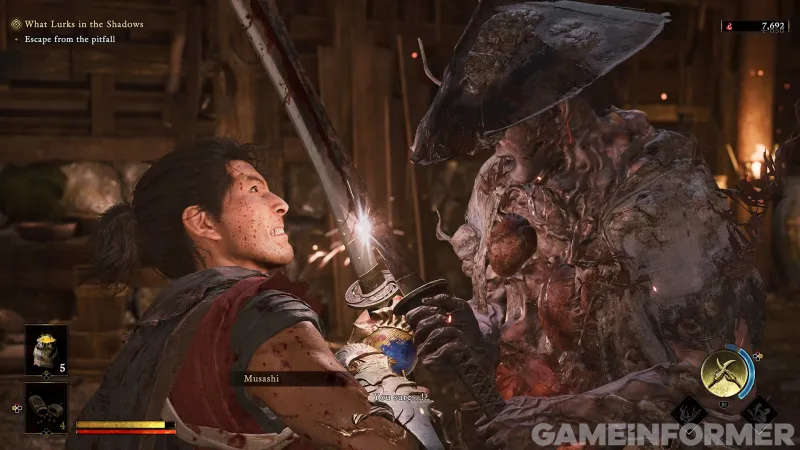
After two decades of silence, Capcom is finally breathing new life into one of its most beloved samurai action franchises. Onimusha: Way of the Sword represents not just a return to form for the legendary series, but a complete reimagining of what samurai combat can feel like in a modern video game. During an extensive hands-on session at Capcom’s Osaka headquarters, director Satoru Nihei and animation team lead Hiroshi Yugen revealed the meticulous process behind updating the franchise’s signature combat system while honoring its legacy. The development team’s primary mission was ambitious yet straightforward: transform the cinematic action sequences that made previous Onimusha cutscenes so memorable into actual playable gameplay experiences.
The Onimusha series first launched in 2001 on PlayStation 2, quickly becoming one of Capcom’s flagship franchises alongside Resident Evil and Devil May Cry. The original games blended supernatural horror elements with historical samurai settings, creating a unique atmosphere that resonated with players worldwide. The series achieved significant commercial success, with the first four mainline entries collectively selling millions of copies. However, after Onimusha: Dawn of Dreams in 2006, the franchise went dormant, leaving fans wondering if they would ever see Musashi’s blade flash again. Now, twenty years later, Capcom believes the timing is perfect for resurrection.
Drawing Inspiration From Cinema’s Greatest Samurai
When Yugen joined the project at Nihei’s request, his first instinct was to study the series’ roots. After reviewing past Onimusha titles, he identified a clear creative direction: the larger-than-life moments that previously existed only in cutscenes needed to become the foundation of Way of the Sword’s gameplay. This meant extensive research into historical samurai techniques, Edo-period sword fighting fundamentals, and the art of the duel. The team consulted with professional sword fight choreographers to understand the reasoning behind different attacks, defensive postures, and combat movements, ensuring every animation would feel authentic and grounded.
The involvement of legendary Japanese actor Toshirō Mifune’s likeness as protagonist Miyamoto Musashi made studying his filmography essential. Yugen and his team watched Mifune’s performances in Akira Kurosawa’s iconic samurai films and the 1950s Samurai Trilogy, analyzing not just his combat movements but his human moments as well. “We watched a lot of different movies in the samurai genre to really get a feel for what goes into those, what makes the samurai,” Yugen explained. “We didn’t just focus on the action in those movies but also the more human side of things. You know, like the defeated samurai escaping from battle – those elements as well are something we looked at really closely.” This attention to emotional authenticity ensures that Musashi feels like a complete character, not merely a weapon-wielding avatar.
Modernizing The Signature Issen System
One of the most challenging aspects of development involved updating the Issen, the franchise’s signature counterattack move. This technique, executed by attacking an enemy at the precise moment they strike, delivers instant kills on standard enemies and devastating damage to larger foes. While the Issen felt satisfying in previous games, Yugen noted that the action happened so quickly that players often couldn’t fully appreciate what was occurring on screen. Nihei tasked him with making the Issen more realistic and visually comprehensible while maintaining its dramatic impact. The result is approximately ten different Issen variations depending on incoming attack angles, giving players a dynamic and responsive combat experience.
Perhaps the most technically demanding innovation involves Musashi’s blocking system. Director Nihei challenged Yugen to create animations allowing Musashi to block from dozens of angles realistically, without the character appearing to simply pivot in place. This meant developing separate animations for high-behind, mid-behind, low-behind, high-left, mid-left, and numerous other directional combinations. “It was a difficult and time-consuming process, but now that it’s in the game and seeing how it works and how it’s been received, I’m glad we put it in there,” Yugen reflected. This level of animation detail creates an unprecedented sense of tactical awareness in combat, where every enemy positioning matters.
Balancing Legacy With Modern Game Design
Nihei describes Yugen as a “legend within Capcom,” and his thirty years of experience at the company proved invaluable in navigating the delicate balance between honoring the franchise’s past and embracing modern design sensibilities. While returning mechanics like the Issen and Chain Issen maintain continuity with earlier titles, new additions like the Blade Barrage demonstrate the team’s willingness to evolve. The action game landscape has transformed dramatically since the original Onimusha games, and the development team studied contemporary titles to understand player expectations while ensuring Way of the Sword maintains its distinct identity.
One of the most player-friendly additions involves dual control schemes: Aggressive and Defensive. The Aggressive layout places main attacks on face buttons with blocks assigned to Square, designed for confident action game veterans. The Defensive scheme moves blocking to L1, making parries more accessible for those less familiar with the genre. The team debated which approach to implement before ultimately deciding both perspectives deserved representation. Players can test these control schemes in the available demo on PlayStation 5, Xbox Series X/S, and PC, though no Nintendo Switch 2 demo has been announced despite the platform being included in the launch plans.
The Road To Release
Capcom has positioned Way of the Sword as potentially the “pinnacle of swordplay action games,” a bold statement that reflects the studio’s confidence in what they’ve created. The game removes some elements from previous entries, such as puzzle boxes and minigames, while introducing larger environmental puzzles and reportedly bringing back the Phantom Realm feature that fans remember fondly. Interestingly, Way of the Sword isn’t narratively connected to previous Onimusha games, allowing new players to experience the franchise without extensive background knowledge while still including homages for longtime fans.
The choice of Kyoto as the game’s primary setting and Miyamoto Musashi as its protagonist demonstrates Capcom’s commitment to historical authenticity blended with supernatural elements. Musashi, one of Japan’s most famous swordsmen who authored “The Book of Five Rings,” provides a legendary foundation for the game’s combat philosophy. As the action game genre continues evolving with titles like Sekiro: Shadows Die Twice and Ghost of Tsushima raising player expectations for samurai experiences, Way of the Sword enters a competitive landscape. However, Capcom’s meticulous attention to animation detail, historical research, and the franchise’s unique supernatural elements may give it the distinctive edge needed to reclaim the samurai action throne it occupied two decades ago.
Expert Opinion: Capcom’s decision to invest heavily in animation authenticity and control accessibility signals a mature understanding of the modern action game market. By bridging the gap between hardcore precision combat and approachable defensive options, Way of the Sword could potentially capture both nostalgic fans and newcomers. If the studio successfully delivers on its promise of “playable cinematics,” this could establish a new benchmark for melee combat design in the action genre.