
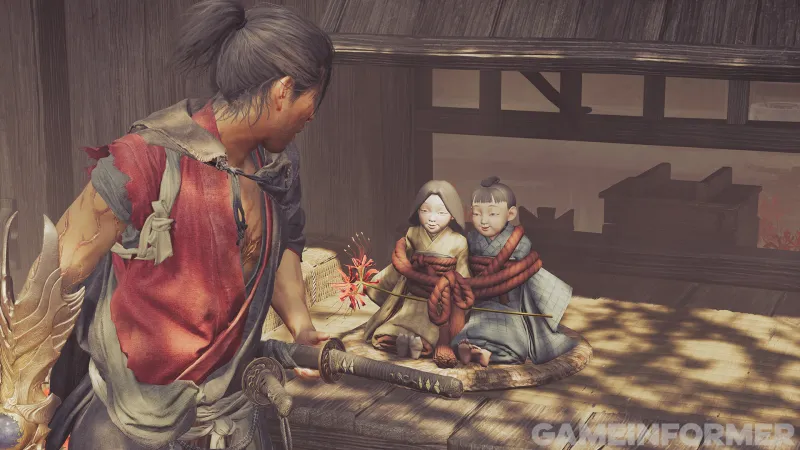
Capcom’s highly anticipated action game Onimusha: Way of the Sword is set to release in just a few weeks, bringing with it not only intense samurai combat but also a meaningful spotlight on one of Japanese history’s most remarkable women. The game, which graces the cover of Game Informer, represents a major revival of the beloved franchise after a two-decade hiatus. While much attention has focused on the game’s protagonist, legendary swordsman Miyamoto Musashi, recent revelations from the development team highlight another historical figure who plays a significant role in the narrative: Izumo no Okuni, the woman credited with inventing Kabuki theater.
During an exclusive visit to Capcom’s Osaka headquarters, journalists had the opportunity to learn about the creative decisions behind the game’s story. Lead writer Hiroshi Yamashita revealed his personal passion for including Okuni in the game, a dream he had pursued for over two decades while working in the industry. The historical figure, born around 1578, revolutionized Japanese performing arts and left an indelible mark on the nation’s cultural heritage that persists to this day.
The Historical Significance of Izumo no Okuni
Izumo no Okuni emerged during a transformative period in Japanese history, establishing herself as an entertainer who would fundamentally change the landscape of Japanese performing arts. Historical records indicate she began performing near the Kamo River in Kyoto, where today a beautiful bronze statue stands as a testament to her enduring legacy. Unlike many women of her era who gained historical recognition primarily through their associations with powerful men, Okuni carved her own path to prominence through sheer talent and innovation. She is widely credited with creating Kabuki, a theatrical art form characterized by elaborate costumes, stylized movements, and dramatic storytelling that remains one of Japan’s most treasured cultural traditions.
The Edo period, during which Onimusha: Way of the Sword is set, was known for its relative peace and stability following centuries of civil war. However, this era’s historical documentation predominantly focused on men and their achievements, with women typically appearing in records only in relation to prominent male figures. Okuni represented a remarkable exception to this pattern, rising from obscurity to become a cultural icon whose influence transcended gender barriers and social expectations of the time. Her performances attracted audiences from all social classes, and her innovative theatrical style eventually evolved into the Kabuki tradition that would be recognized by UNESCO as an Intangible Cultural Heritage of Humanity.
A Twenty-Year Dream Realized
For lead writer Hiroshi Yamashita, including Okuni in Onimusha: Way of the Sword represents the culmination of a career-long ambition. Throughout his twenty years working as a scenario writer and lead writer on various projects, Yamashita repeatedly attempted to incorporate the historical figure into games, but circumstances never aligned properly until now. The emotional significance of finally realizing this goal was evident when he spoke about the character’s inclusion in the game. “So finally, after 20 years of working as a scenario writer or lead writer, being able to finally have her in this game is a dream come true for me,” Yamashita explained during the interview.
While specific details about Okuni’s role in the game remain under wraps, Yamashita revealed that protagonist Miyamoto Musashi visits a location called Dokyo’s underground lab specifically because of Okuni, though he stopped short of explaining the exact connection. This tantalizing detail suggests that her character will be more than a mere historical cameo, potentially playing a crucial role in the game’s dark-fantasy narrative. Yamashita emphasized that her ability to rise to prominence and maintain her historical significance despite the turbulent times deeply impressed him, serving as his primary motivation for wanting to include her in the game.
Blending History with Dark Fantasy
Onimusha: Way of the Sword represents a careful balance between historical authenticity and supernatural storytelling that has defined the franchise since its inception. The game is set in Kyoto during the Edo period, utilizing Capcom’s powerful RE Engine to bring the ancient capital to life with unprecedented detail. By incorporating real historical figures like Miyamoto Musashi and now Izumo no Okuni, the developers create a narrative foundation rooted in actual history while layering supernatural elements involving demons called Genma and mystical artifacts like the Oni Gauntlet worn by the protagonist.
The franchise’s return after more than two decades has generated significant excitement among fans who remember the original PlayStation 2 titles fondly. Capcom has been transparent about their ambitious goals for the project, with developers stating that success for them means establishing Onimusha: Way of the Sword as the “pinnacle of swordplay action games.” The inclusion of historically significant figures like Okuni demonstrates the development team’s commitment to crafting a narrative with genuine cultural depth, moving beyond simple action gameplay to tell stories that resonate with Japan’s rich heritage while appealing to international audiences.
Expert Opinion: The inclusion of Izumo no Okuni in Onimusha: Way of the Sword represents a significant cultural statement from Capcom, demonstrating how video games can serve as vehicles for historical education while delivering compelling entertainment. By spotlighting a woman who defied societal expectations to create one of Japan’s most enduring art forms, the game has the potential to introduce international audiences to an important historical figure often overlooked outside academic circles. This approach of weaving authentic historical personalities into fantastical narratives could establish a template for future action games seeking deeper cultural relevance.